
Standard Criteria
If you are building near to a public sewer and can meet the criteria below, then you can proceed with your project.
You will need to meet all six of the listed criteria and it is important that you thoroughly review each point in turn. The implication of proceeding on the basis of inaccurate response can be significant and may make it more difficult to sell your house in the future.
Please note that the criteria do not apply if you are building over a public sewer. For that, you will need to apply to us for a review.
We have summarised the six criteria below, and there are helpful tips and diagrams to explain each one.
We recommend that you discuss them with an architect or builder.
Important: You must meet all six of the following criteria
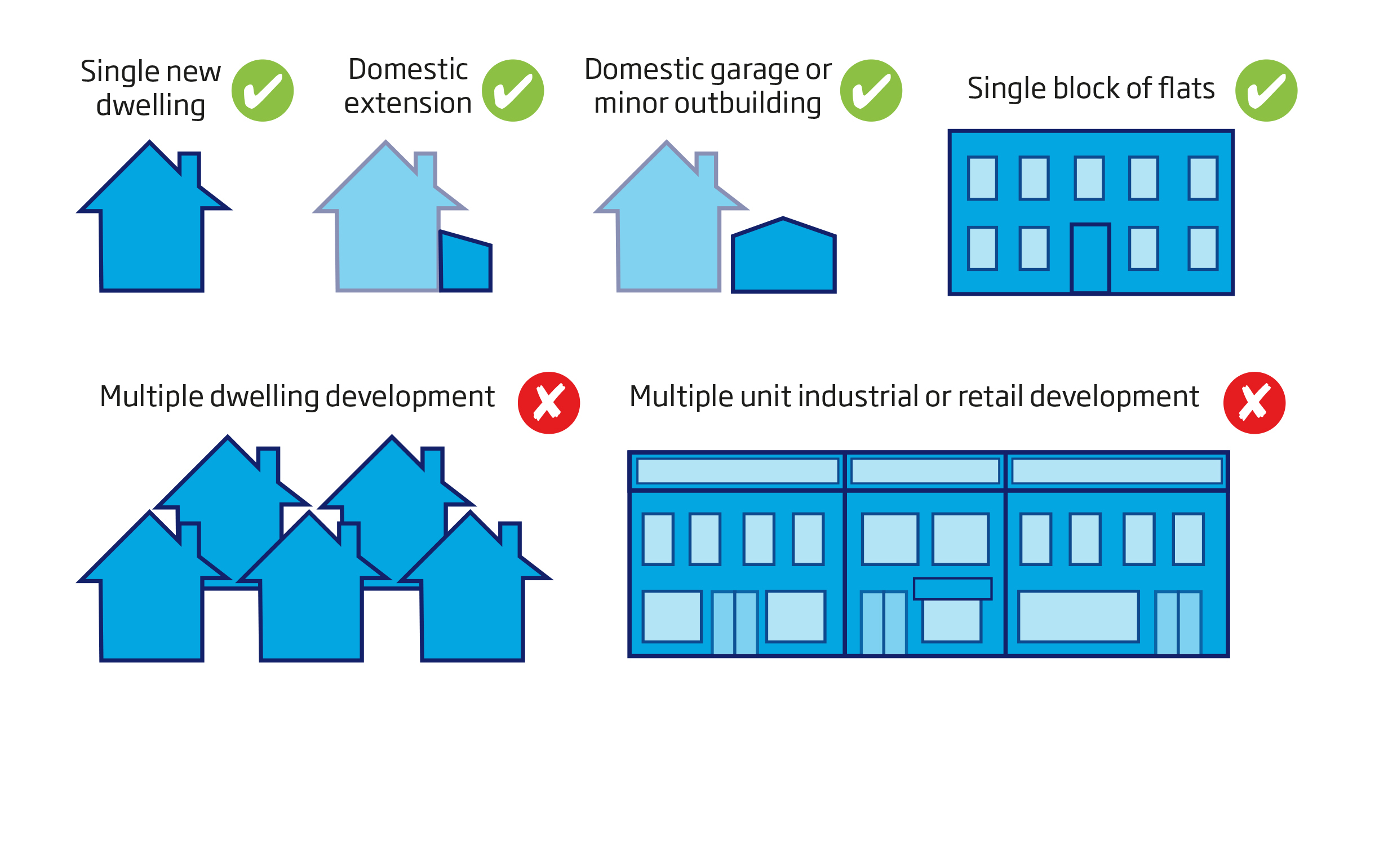
Development type
Your development is a
- single new dwelling
- domestic extension
- domestic garage or minor outbuilding
- single block of flats
not eligible
- multiple dwelling development
- multiple unit industrial or retail development
Foundation type
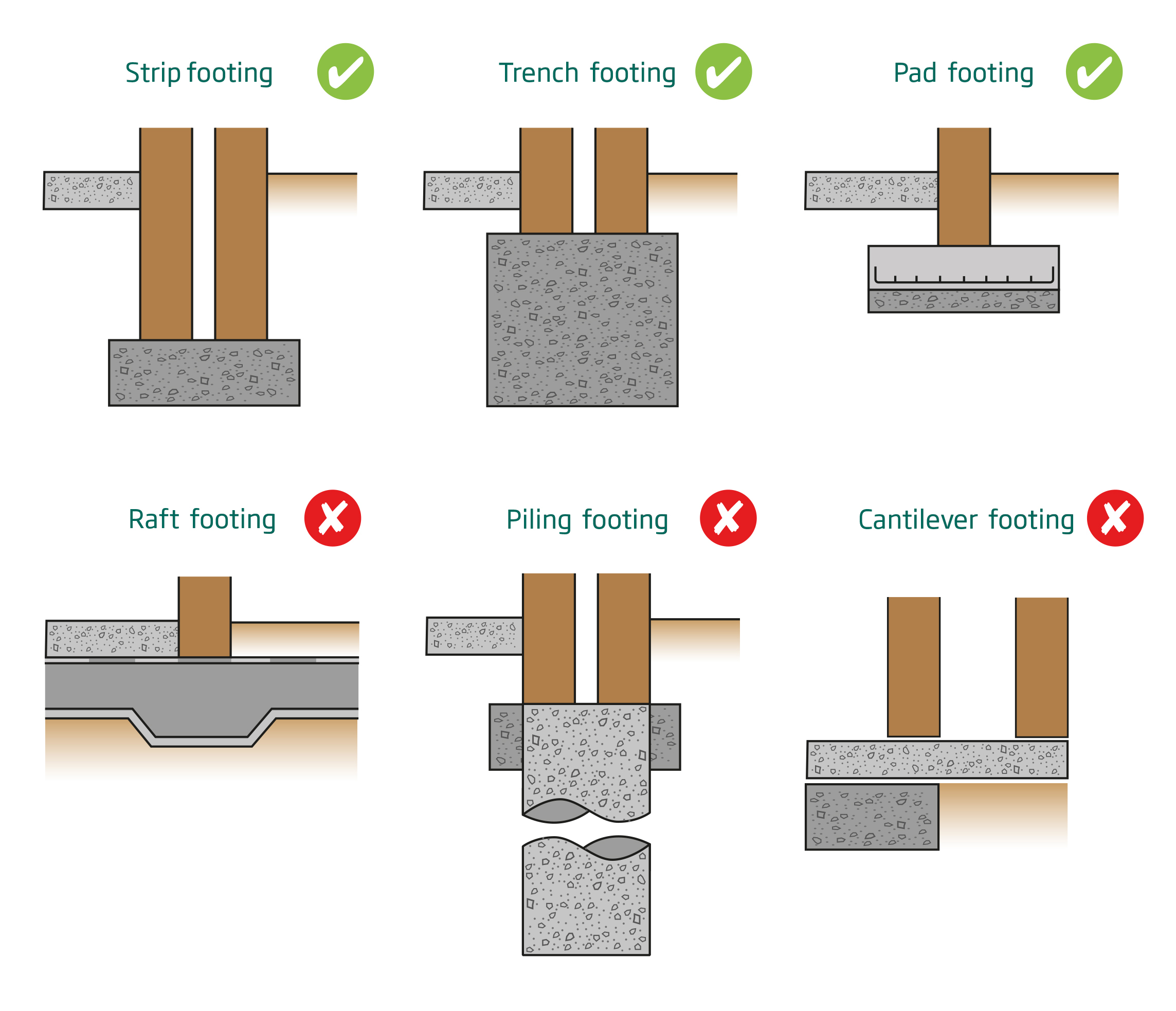
The foundations used will be:
- strip footing
- trench footing
- pad footing
not eligible
- raft footing
- piling footing
- cantilever footing
Foundation distance from sewer
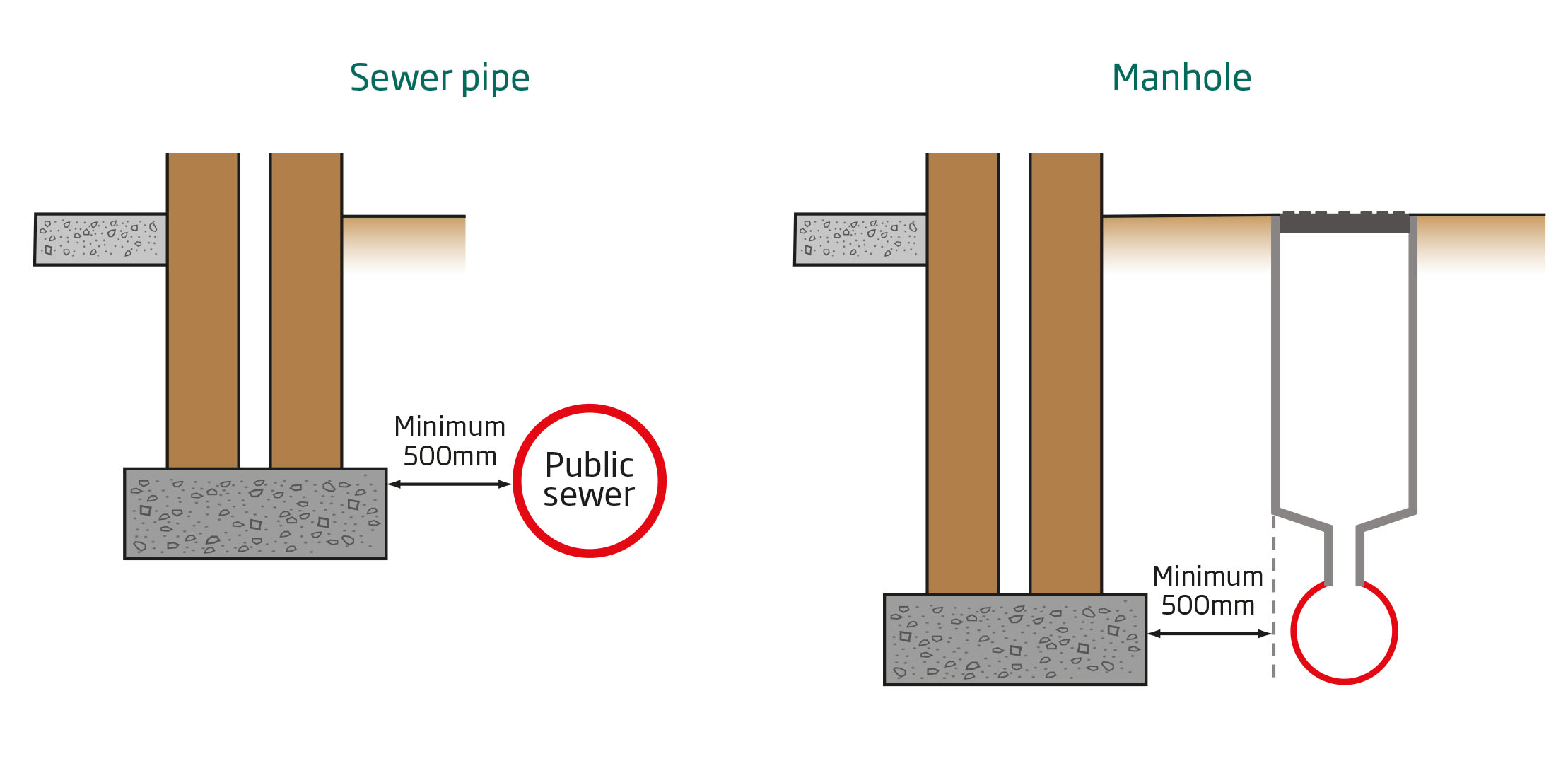
The foundations will be a minimum of 500mm (0.5m) clear from the edge of the closest public sewer (including the outer wall of any chambers)
Foundation depth
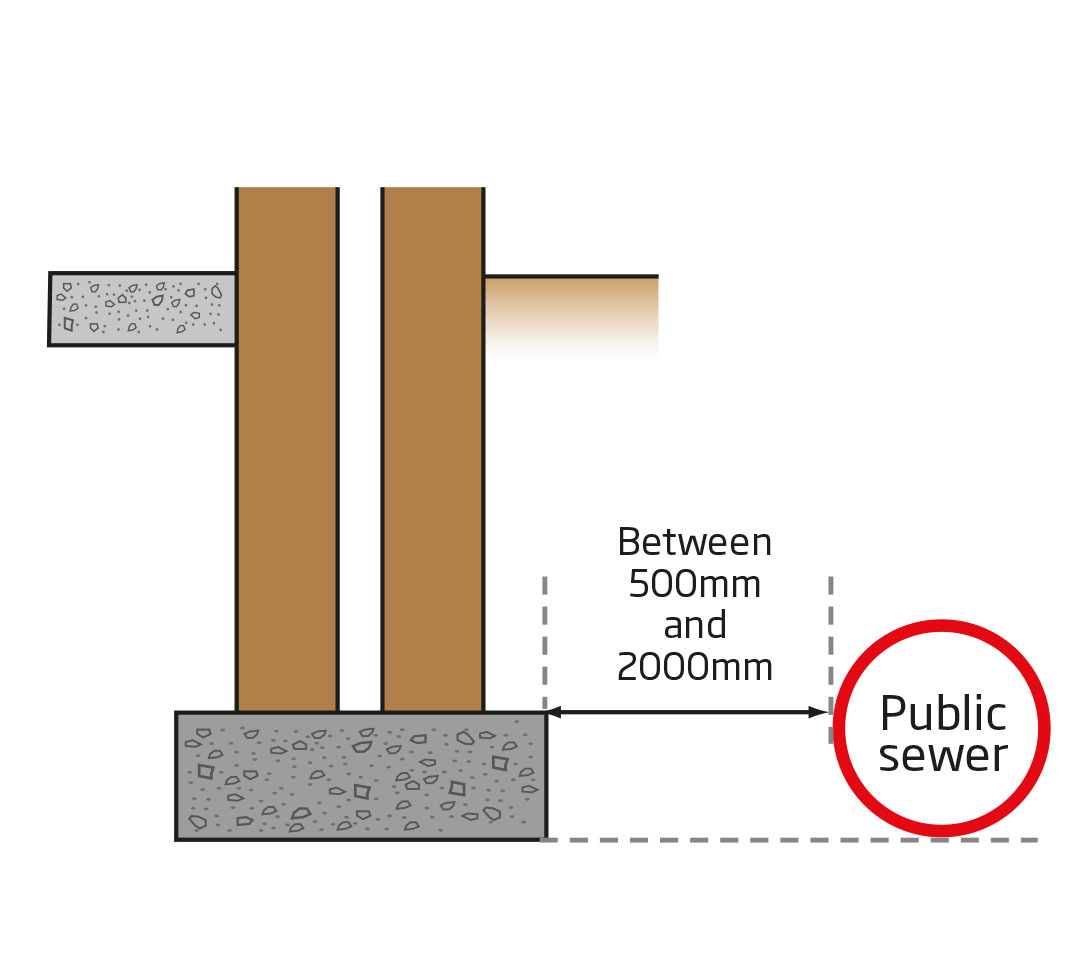
Foundations installed between 500mm (0.5m) and 2000mm (2m) clear of the sewer shall be taken to a depth that is below the bottom of the sewer pipe.
Type of sewer
The sewer pipe is gravity-based, foul, rainwater or combined
What are they?
Gravity-based
A gravity based sewer flows downhill. Typically, if you look in the manhole you will see an open pipe. In a pumped system the pipe is fully enclosed and waste is pumped within it.
Foul
A foul pipe takes your toilet waste and waste from your sinks and washing machine.
Rainwater
Rainwater pipes take rainwater only.
Combined
Combined sewers take foul and rainwater.
How do I find this information?
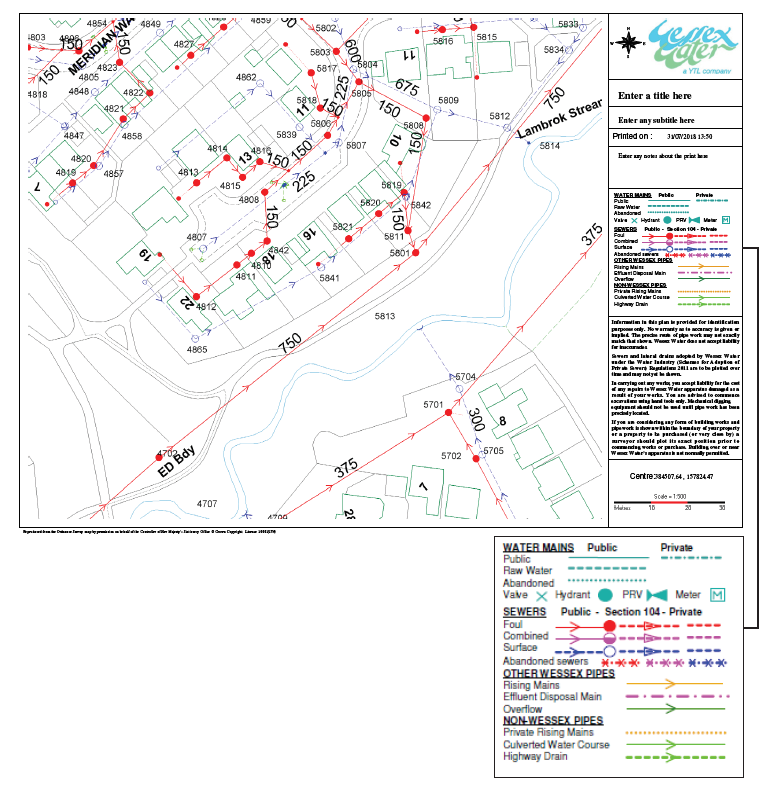
By obtaining a map of your site
You should also follow this guidance on finding a public sewer.
The sewer pipe is a minor asset
What is a minor asset?
A minor asset is one that is not considered strategically important to Wessex Water.
What is a strategic sewer?
A strategic sewer carries waste for a large amount of properties. Typically, they are large (12inches/300mm or greater) in diameter, but they can be smaller diameter and still be strategic.
How will I know if a sewer is strategic?
Call us on 01225 526333, we can check our records for you, and let you know if there is a strategic sewer.
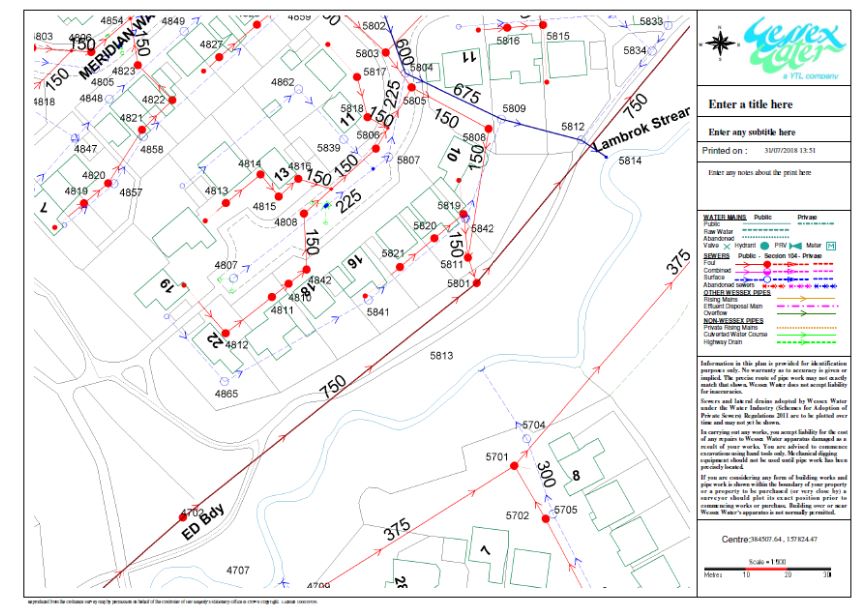
See an example of what strategic sewers may look like on our records. The sewers appear in bold, blue for a surface water sewer and bold red for a foul sewer.
I meet the criteria
If you have met all six of the criteria then a printable PDF of these conditions should be saved for your records. If your development requires Building Regulations approval, you can provide a copy to your local Building Control department or Private Inspector.
We also recommend you collate and store evidence (photos & drawings) that you have met the six criteria. This will provide you with peace of mind and protection in the unlikely event that something goes wrong in the future.
I don't meet the criteria
If you didn’t meet all six of the criteria, then where possible you should first consider changing your design until it does. If you still can’t meet the criteria, you will need to contact us to obtain formal consent for your proposal. The type of application that you need to make will vary depending on your site circumstances. So that we can give you accurate advice, please email sewer.protection@wessexwater.co.uk and provide as much detail as you can, preferably including design drawings or a sketch which clearly illustrates the details of your proposal.